Editorial Note: This article is written based on topic research and editorial review.
In an increasingly digitized world, the quest for enhanced cognitive function often intersects with innovative digital experiences. The phrase "this roman numerals to 35 password game will make you smarter" emerges as a fascinating example, encapsulating a specific type of educational entertainmentor "edutainment"that promises mental agility through a structured challenge. This concept, seemingly simple on the surface, hints at a deeper engagement with numerical systems, pattern recognition, and memory retention, all wrapped within the contemporary paradigm of gamified learning.
Editor's Note: Published on 2024-07-30. This article explores the facts and social context surrounding "this roman numerals to 35 password game will make you smarter".
Designing for Cognitive Enhancement
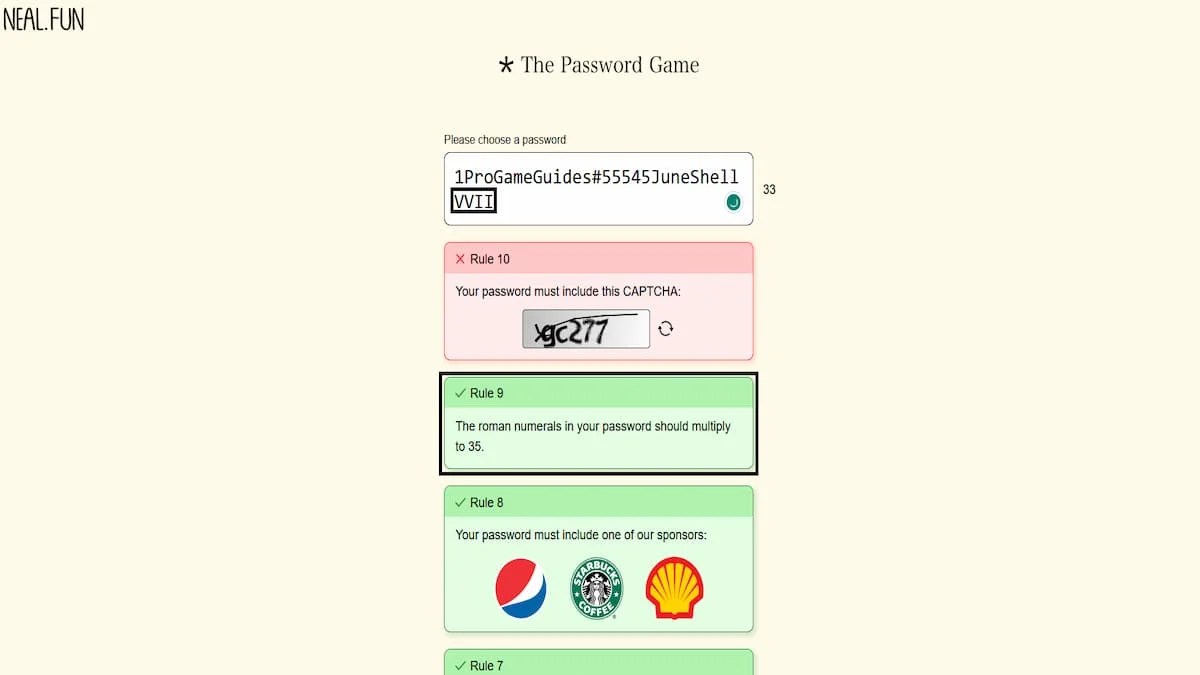
At its core, a "Roman numerals to 35 password game" likely functions by presenting a Roman numeral (e.g., XXXV, XXIV, IX) and requiring its Arabic equivalent (35, 24, 9) as a password, or vice-versa. Alternatively, it could involve a series of Roman numerals that need to be arranged in a specific sequence, or perhaps performing simple arithmetic operations on them before deriving a password. The "to 35" specification is crucial, as it limits the scope of numerals, making the challenge accessible yet sufficiently complex to demand focused attention. Mastery of Roman numerals up to 35 (I, V, X, L) involves understanding additive and subtractive principles (e.g., IV for 4, VI for 6, IX for 9, XI for 11, XL for 40, though not relevant to 35). This specific range ensures players become adept at recognizing and manipulating these foundational symbols, a skill that requires active processing rather than passive recognition.