Editorial Note: This article is written based on topic research and editorial review.
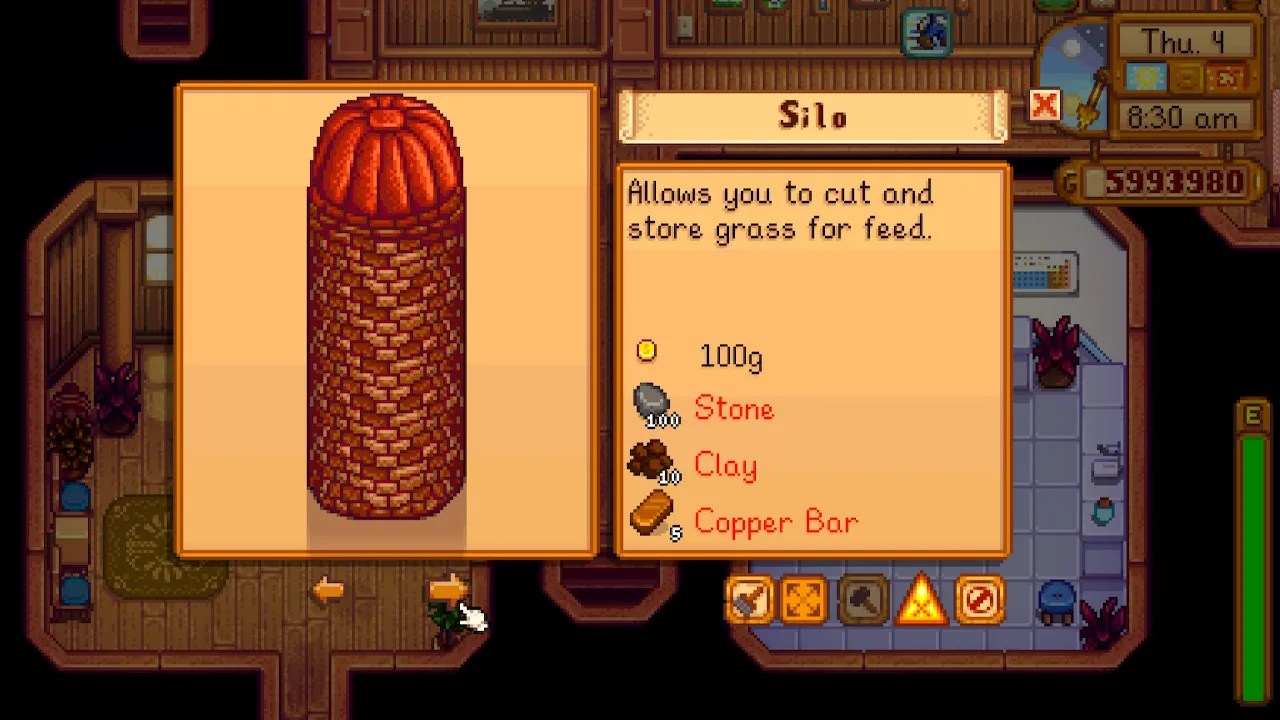
Within the gaming community surrounding Stardew Valley, a prevalent and often surprising revelation for many players concerns the operational mechanics of silos. This insight typically revolves around the automatic collection of hay. Contrary to initial assumptions that might suggest manual loading, a built silo instantly collects hay whenever grass is cut on the farm, regardless of whether a scythe is used or if an animal building is present. This automatic deposit occurs even if a player's inventory is full, meaning that simply clearing areas of grass contributes directly to the farm's hay reserves without any additional player intervention for collection or storage transfer.
The understanding of this automated hay collection system holds significant importance for efficient farm management. Its primary benefit is the substantial reduction of manual labor and inventory management associated with feeding livestock. By eliminating the need to manually pick up hay and transfer it to the silo, the game streamlines the process of animal husbandry, allowing players to allocate their time and inventory space to other essential farming activities. This design choice, while potentially a surprise to new players, represents a core quality-of-life feature that ensures a consistent and readily available food supply for animals, thereby supporting sustainable and prosperous livestock operations.
This foundational knowledge concerning silo functionality transitions into broader strategies for optimizing farm layouts and daily routines. Recognizing the passive nature of hay acquisition empowers players to plan their farm more strategically, integrating grass patches as a renewable resource that automatically feeds into their animal care systems. It encourages efficient resource cycling and farm design, moving beyond mere survival to a more advanced level of agricultural planning where the timing of grass cutting and the placement of animal dwellings become integral to maximizing productivity and minimizing repetitive tasks.
The Shocking Truth About Stardew Valley Silos
The preceding exploration has elucidated a pivotal and frequently surprising operational truth concerning Stardew Valley silos: the automated collection of hay. This mechanism, which instantly transfers severed grass into storage without requiring manual player intervention, fundamentally shifts the paradigm of resource management within the game. It bypasses the common assumption of manual collection, instead offering an elegant solution to a critical farming need. The revelation of this automated process underscores its profound importance in streamlining livestock care, significantly reducing labor, and freeing player inventory space. This intrinsic efficiency is not merely a convenience but a cornerstone of effective farm planning and sustained animal husbandry, profoundly impacting daily routines and long-term strategic decisions.
This detailed understanding of silo functionality transcends simple game mechanics; it represents a significant quality-of-life feature that, once comprehended, transforms gameplay from reactive survival to proactive strategic mastery. The implications of this knowledge encourage a more deliberate approach to farm layout, grass cultivation, and seasonal preparation, particularly for winter months. Mastering this automated system empowers players to optimize resource flow, minimize inefficiencies, and ultimately cultivate a more prosperous and sustainable agricultural enterprise. The continuous discovery and application of such nuanced game mechanics remain essential for maximizing productivity and fully appreciating the intricate design inherent in Stardew Valley's world.